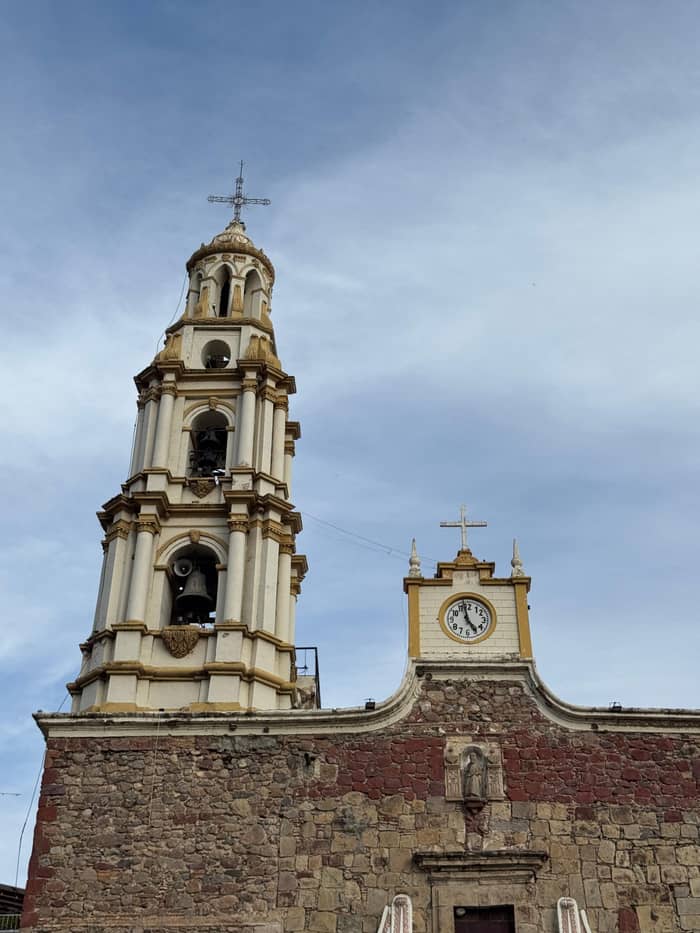
Boat
Cruise after lunch
30 minutes with a drink
- Hours8
- Rated4.7
- Reviews294
Checklist you can tick
Prep list · 8 items
Mark each item when done. Progress is stored on this device.
0 / 8 ready
You are good to go. Only your date and your party size are left to choose.
Save a placeMexico's largest lake looks inviting from a boat, but the question is fair: is it clean, how polluted is it and should you get in? This page lays out what the official sources measured and where they disagree.
Editorial team, ajijictour.click · Updated November 23, 2026 · 6 mins to read
Quick look
People ask whether you can swim in Lake Chapala because the lake is big, blue and warm-looking, and because the shoreline towns sell it as a place to relax. None of the official sources used on this site states a swimming recommendation or names a bathing area, so there is no stamp of approval to point to. What there is instead is water-quality data from the national water commission and an older environmental sheet.1,3
That data does not give a simple yes or no. It rates some indicators as excellent, others as contaminated, and it measures the lake as a source of drinking water and a habitat, not as a beach. The state water commission says the lake supplies 60% of the water that reaches the Guadalajara metropolitan zone, so its condition matters well beyond the tourist towns on the shore.5
The tour sold on this site does not ask you to decide. The water appears as a 30-minute boat cruise with a drink on board, and the remaining hours go to a ranch, a distillery, lunch and the lakeside towns. The sections below explain what the numbers mean so that you can decide for yourself on a free afternoon.
Side by side
| Indicator | Rating | Sites | Readings per 100 mL |
|---|---|---|---|
| E. coli | Excellent | 341 | 1.5 to 1101 |
| Fecal coliforms | Acceptable | 142 | 275 to 8632 |
| Fecal coliforms | Contaminated | 162 | 1,083 to 9,6812 |
| Oxygen demand | Excellent | 346 | Not stated |
The ratings are the national water commission's own, from its monitoring data for 2012 to 2018; they describe the lake as a water body and are not a bathing advisory.6
A key official document is the diagnosis that CONAGUA, the national water commission, wrote from its monitoring data for 2012 to 2018.6 It rates the lake across 34 monitoring sites, and the results are mixed in an informative way, which makes them more useful than a single score.6 Biochemical oxygen demand, a measure of organic load, is rated Excellent at all 34 sites.6
Escherichia coli is rated Excellent at all 34 sites too, with readings between 1.5 and 110 per 100 mL.1 Fecal coliforms tell a harder story. The lake's quality for that indicator ranges mainly between Acceptable, with readings of 275 to 863 per 100 mL at 14 sites, and Contaminated, with readings of 1,083 to 9,681 per 100 mL at 16 sites.2
Read those two results together. An excellent E. coli rating and a contaminated coliform rating on the same lake mean that the picture changes with the indicator and with the site, and that no single word describes the whole shoreline. If you are the kind of traveler who wants one clean answer, the careful one is that the lake is mixed, and that you should keep your head out of it.1,2
The 2008 Ramsar information sheet, compiled by the Jalisco government for the lake, paints a darker picture.3 It says the lake was at that time heavily contaminated with heavy metals and other toxic substances because of missing or insufficient water treatment.3 Treat the sheet as a dated snapshot and not as today's reading, but do not ignore it, because it shows why questions about pollution have followed the lake for years.
The CONAGUA diagnosis adds a local detail. It lists seven registered wastewater discharges around the lake, one of them in Ajijic, and says only discharge number 2 in Jamay and number 7 in Ajijic exceeded the permitted limits for nitrogen, phosphorus, fecal coliforms and suspended solids.7 That is a point source in a town that visitors walk through, which is a reason to look at the water edge before you step into it.
Plants add to the picture. Water hyacinth is another issue; the Ramsar sheet records many problems it has caused for navigation and fishing, so floating green may cover the surface near some piers and shores.9 A lake with mats of weed, a wastewater outlet and varied bacterial readings is not the same as a swimming beach, however calm the water looks from the boardwalk.
Pick your approach
Say how you want to use the lake and the matching advice follows.
If I want a definite answer on swimming
Stay out
The data is mixed, with fecal coliforms Contaminated at 16 sites.2
If I want to see the lake safely
Take the cruise
The cruise runs for 30 minutes and a drink is included.
If I want a cool-down
Use a hotel pool
April averages a daily high of 29.9 °C at the Chapala station.8
If I worry about plants and weeds
Watch the shore
Water hyacinth has caused navigation problems.9
If I trust the tourism board
Read its wording
It describes the water as among the cleanest in the country.4
Without getting wet
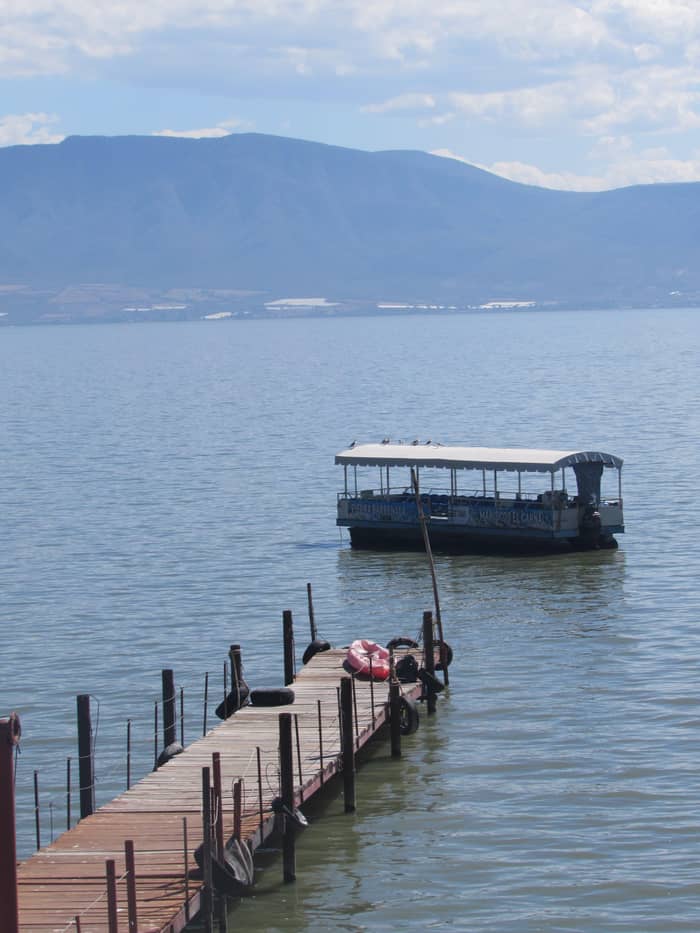
Boat
30 minutes with a drink
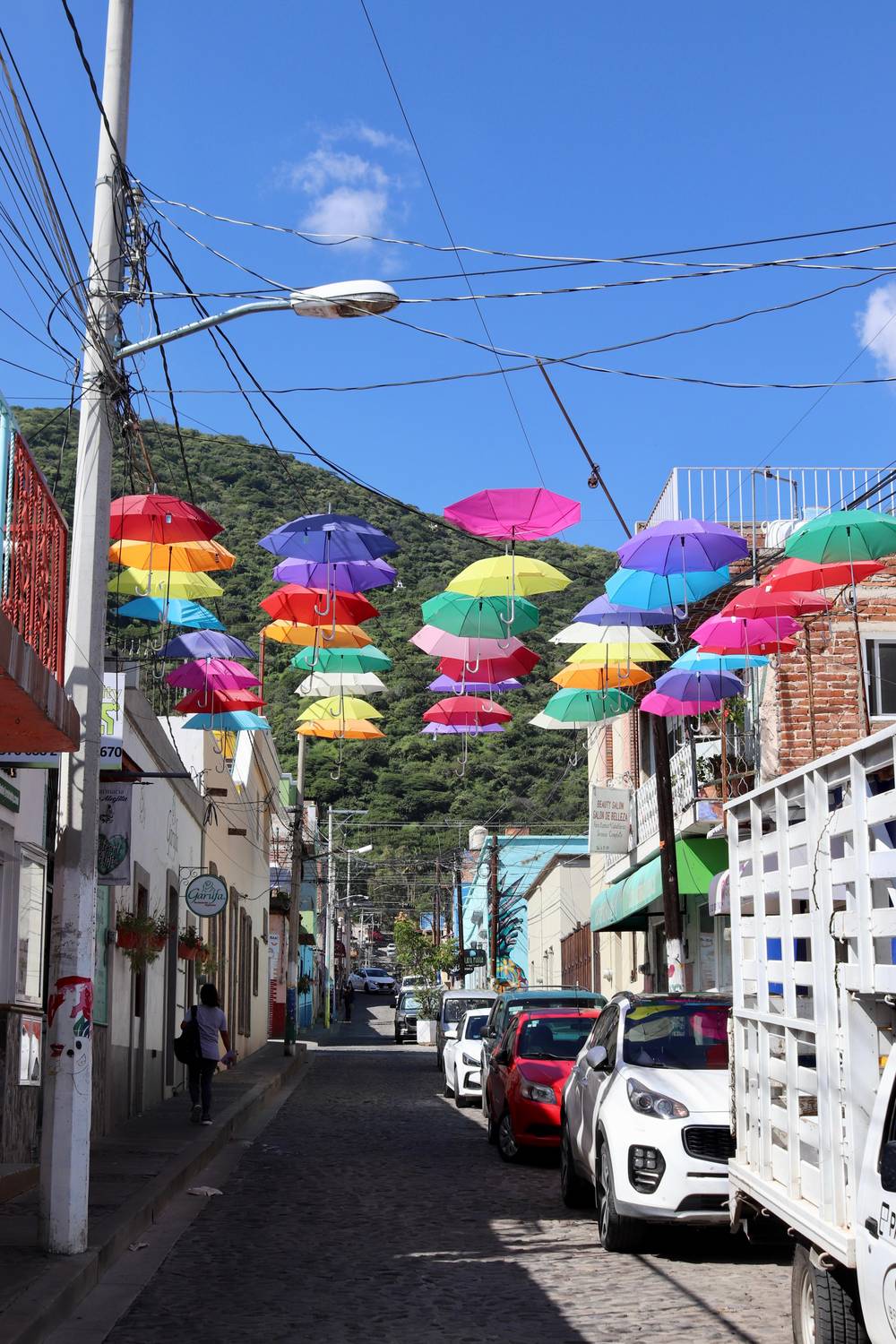
On foot
Guided walk in Ajijic
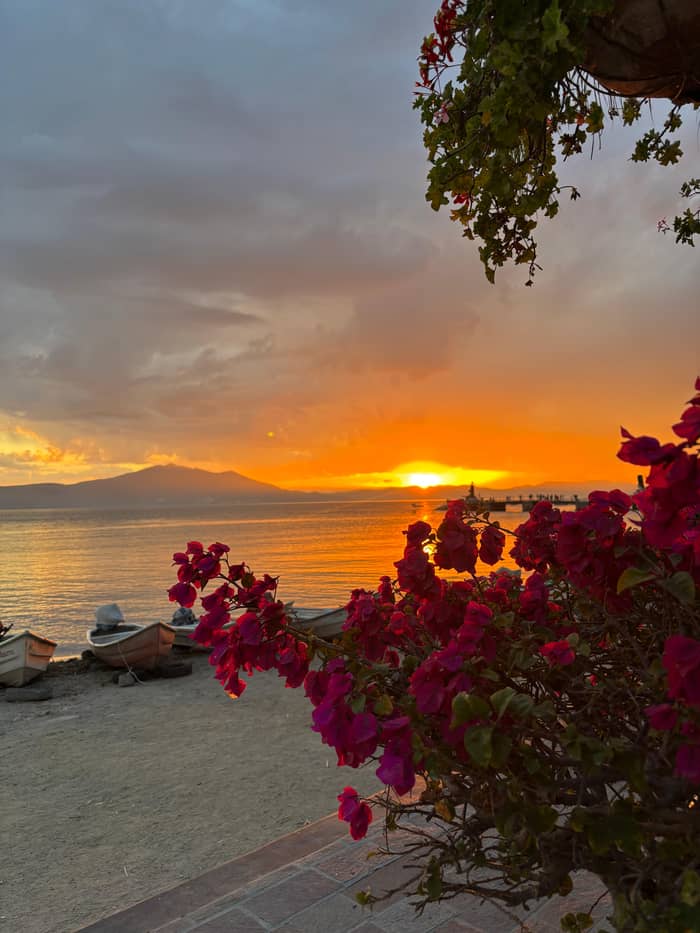
Lunch
Gondola ride included
On the other side of the argument stands the national tourism board. Visit Mexico takes a brighter view, saying that conservation work over the years has put it among the cleanest lakes in the country and that visitors come to Ajijic for its waterfront, food and air.4 That is a promotional statement for visitors, and it does not claim the lake is a bathing area.
Why do the sources disagree? They measure different things at different times. The Ramsar sheet dates from 2008 and describes contamination by heavy metals, the CONAGUA diagnosis covers monitoring data for 2012 to 2018 and rates individual indicators, and the tourism board speaks in general terms about conservation.3,6,4 Each can be right about its own subject while leaving the swimmer's question open.
A useful rule is to trust the most specific source for the question you are asking. For bacteria in the water, the CONAGUA indicators are the most specific, and they show both excellent and contaminated readings.1,2 For atmosphere and scenery, the tourism board is the right guide, and on those terms the lake is hard to fault from a boat or a pier.
What each source says
Earlier sheet
The Ramsar sheet called the lake heavily contaminated with heavy metals.3
Monitoring
CONAGUA rated biochemical oxygen demand Excellent at all 34 sites.6
Monitoring
E. coli earned the Excellent rating at 34 sites out of 34.1
Monitoring
At 16 sites fecal coliforms read Contaminated, and at 14 they read Acceptable.2
Local outlets
Discharge 7 in Ajijic exceeded the permitted limits.7
Tourism
Visit Mexico puts the water among the cleanest in the country.4
The day trip makes swimming beside the point. Depth is modest: 7.7 meters on average at the normal level, falling to 4 to 5 meters around Jocotepec.10 You cross it on a cruise of 30 minutes, then spend 1 hour in Ajijic and another on the Chapala boardwalk and piers, so the lake stays something you look at, photograph and sail on.
Other listings take the same approach. A 9-hour budget day gives 1.5 hours to a lake stop with a break and photos and 2 hours to lunch with a gondola ride, and a 7-hour premium day gives the lake 30 minutes as guided sightseeing. None of the listings checked for this page offers swimming among its stops.
If heat is the reason you are asking, plan the day around shade and water you can drink. A hat, a cold drink in the boat and a pause in a lakeside restaurant cool you down without a swim, and the heat builds toward spring, with an average daily high of 29.9 °C in April at the NOAA station in Chapala.8
Video
JB's Big Adventure on YouTube · Until you tap play, no video is loaded.
For fecal coliforms, the water quality of Lake Chapala ranges mainly between Acceptable at 14 sites and Contaminated at 16 sites.
Some travelers will still want a dip, and the honest advice is to ask locally and to choose a pool. Hotels and clubs around the lake keep pools, and a pool avoids the question of coliforms, discharges and weeds altogether. Ask your hotel or your guide about the current state of the shoreline you plan to use, because conditions change with the season and the lake level.
The level matters because it moves a great deal. According to the state water commission the volume has ranged from 954 million cubic meters in June 1955 to 9,663 million in September 1926, with 5,463 million as the average since 1900.11 A shoreline that was a beach one year can be mud flats or a weedy edge another, and that variation affects both the water and the footing.
Whatever you decide, keep the basic precautions. Do not swallow lake water, cover cuts and scrapes, rinse and dry your skin afterwards and keep children out of the water near piers and outlets. Those are common-sense measures, not figures from a source, and they sit beside the official ratings above rather than replacing them.2
FAQ
The tour sold here has a 30-minute cruise with a drink on board.
The tourism board credits years of conservation for making it one of the cleanest lakes in the country.4
CONAGUA lists a registered discharge in Ajijic among seven around the lake.7
Near Jocotepec it is 4 to 5 meters, and open water averages about 10.9 meters.10
Sources
Further reading
Planning a Lake Chapala day from Guadalajara? Ask a real person here.